Skip to content
Hangar LedgerRoutes and certificates behind United States aviation work

Hangar Ledger

Aviation work in the United States, sorted by the certificate that allows it

Hangar Ledger maps pilot and mechanic certificates, flight schools, repair stations and the agencies that decide how United States aviation work is done.

Every page names the agency that holds the rule it describes and sends you to that page. Where the public record stops, the page says so instead of guessing.

  • 14 pages
  • 5 sections
  • Updated
A mid-size business jet standing inside a bright hangar, nose gear resting on a yellow tow bar, three mechanics in coveralls working along the left wing, red tool chests in the near foreground and an open hangar door behind.
A business jet inside a hangar during a work period. The detail to look at is the tow bar under the nose gear: the aircraft is parked, not running.Illustration generated for Hangar Ledger.

Before the first application

01 Where the work starts, and what it asks for

Aviation in the United States is a set of trades held together by paper. A pilot, a mechanic, a dispatcher and a line technician each hold something the others do not, and each of those things is issued, recorded and checked by name.

This site maps that paper. It does not sell training, it does not rank providers, and no page replaces the text of a regulation; every page names the agency that holds the rule and points at the page where it lives.

Start with the two questions that decide everything else: which certificate you are aiming at, and which agency signs it.

The paperA certificate, a rating or an approvalEach one names what its holder may do, and nothing more.
Who signsThe person the rule authorisesAn instructor, an examiner, or a mechanic with inspection authorization.
How longTraining time and currencyThe route to a certificate is counted in hours and in records, not in weeks.
Where to checkwww.faa.gov/licenses_certificates

Two ways in

02 Pilot or mechanic: the two routes most people weigh first

Most readers arrive with one of two questions. The first is how a person reaches a pilot certificate. The second is how a person reaches the aviation maintenance technician certificate, which carries the airframe and powerplant ratings and the right to return an aircraft to service.

  • Pilot certificates and ratings A student certificate, then a private certificate, then the ratings and certificates that follow. Each step is signed by an instructor or an examiner.
  • Aviation maintenance technician certificate The airframe and powerplant ratings, reached through an approved school or through documented experience, and kept current by the work itself.
A pilot in a dark cap and short jacket writing on a clipboard at a workbench, a second person standing further back, a light aircraft parked outside the open hangar behind them and a printed chart on the bench.
A pilot filling in a form at a bench beside an aircraft. What to look at is the clipboard: the signature goes on paper before the aircraft moves.Illustration generated for Hangar Ledger.

Authorization

Issued by
Federal Aviation Administration
Applies to
Certificates and the ratings printed on them

Between two flights

03 What happens to the aircraft when it is not flying

An aircraft spends most of its life on the ground, and the ground side has its own vocabulary. Five terms carry most of the weight, and each one belongs to a different part of the chain.

FBO (fixed base operator)
The business that runs the ground side of a general aviation field: fuel, parking, hangar space and line services, under an agreement with the airport sponsor.
Repair station
A shop that holds an approval allowing it to perform defined maintenance and return an aircraft to service. The approval describes the scope, not the reputation.
100LL
The avgas grade most piston engines run on. It is a gasoline, and it belongs to a different family from turbine fuel.
Jet A
The turbine fuel family. It is delivered, stored and tested on its own chain, and it never enters a piston aircraft.
8130-3 tag
The document that travels with a part and states where it came from and that it is approved for installation.
A high-wing single-engine aircraft parked on a concrete ramp in front of a hangar corner, a group of six people talking near the building with folders and paperwork in hand, a service truck parked further along the ramp.
A single-engine aircraft on a ramp outside its hangar. The group at the corner is the detail: ground work is a conversation between several trades.Illustration generated for Hangar Ledger.

Who decides

04 The federal map: which body holds which rule

Four authorities reach an ordinary working day at a small field, and they do different jobs. Knowing which one holds a given rule is the difference between a useful question and a wasted phone call.

FAACertificates, airworthiness, airportsIt issues the certificates and approves the organisations that hold them.
TSAScreening and security rulesIts rules reach flight training and airport access, not the certificate itself.
NTSBAccident investigationIt establishes facts after an event; it does not write the operating rules.
Airport sponsorThe field itselfThe owner or authority sets local conditions under the agreements it holds.
A mechanic in a cap reading a printed sheet at a desk with two monitors, a colleague in a dark jacket standing opposite, a business jet parked behind the desk and a tool tray open on the table.
A mechanic reading a printed sheet at a desk on the hangar floor. The tool tray beside the keyboard is the detail: the record and the wrench belong to the same job.Illustration generated for Hangar Ledger.

Who signs

05 The signature line: three documents that decide a career

Nothing in aviation is authorised until somebody signs. The three lines below show, for each large domain of the work, who holds that power and on what document it is exercised. The page on the right of each line takes the question further.

Signer A certificated flight instructor
Document A logbook endorsement
Where to verify FAA pilot training
Signer A certificated mechanic with inspection authorization
Document A maintenance record entry
Where to verify FAA mechanics
Signer The chief pilot or director of operations
Document Operations specifications
Where to verify Federal Register
Six people seated along a long table in an open hangar, laptops and printed sheets in front of them, a light single-engine aircraft parked behind the table and a large hangar sign above the group.
A working group at a table inside a hangar. The papers in front of each person are the detail: this is a records conversation, not a flight.Illustration generated for Hangar Ledger.

The pages

06 Every page on this site, with the date it was published

The list below is the whole site. Each entry carries its section, one line on what it answers, and the date it was published, so a reader can see what is recent and what has been standing for a while.

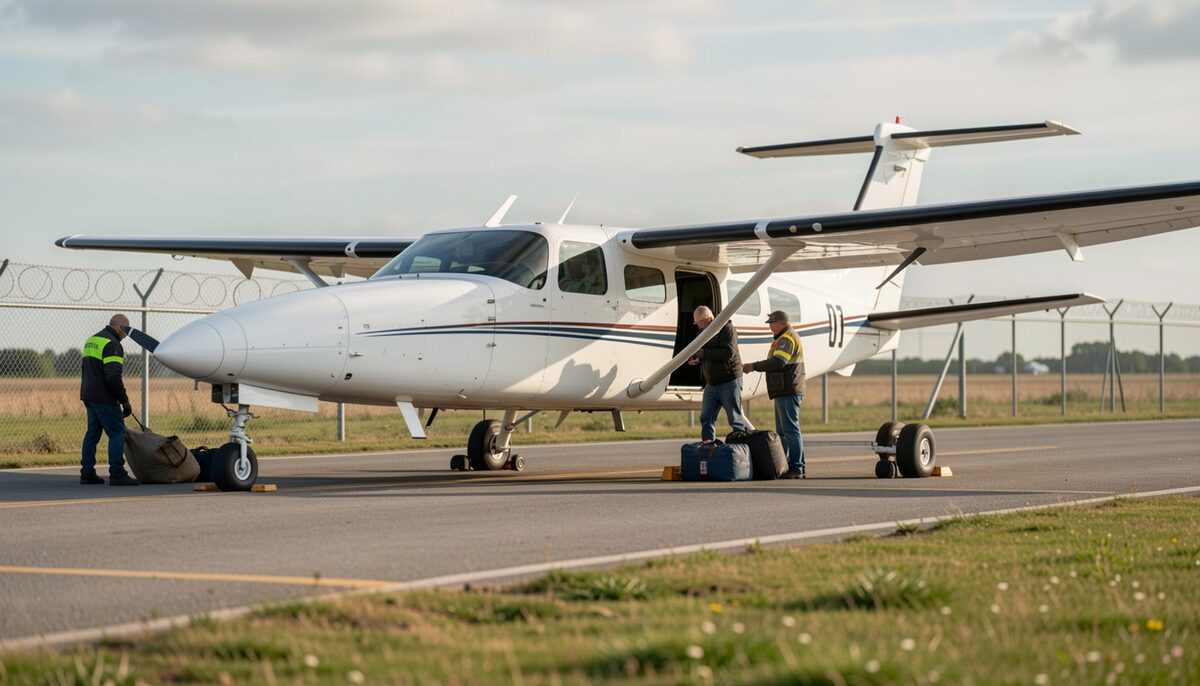
  1. A small charter aircraft parked on a fenced ramp with its forward door open, two crew members loading bags near the nose, a chain-link fence and a service building behind them. Operations and upkeep What a Part 135 operator is and how it is structured Charter and commuter operations fly under Part 135, with rules on crew duty, maintenance and the certificate that authorises them.
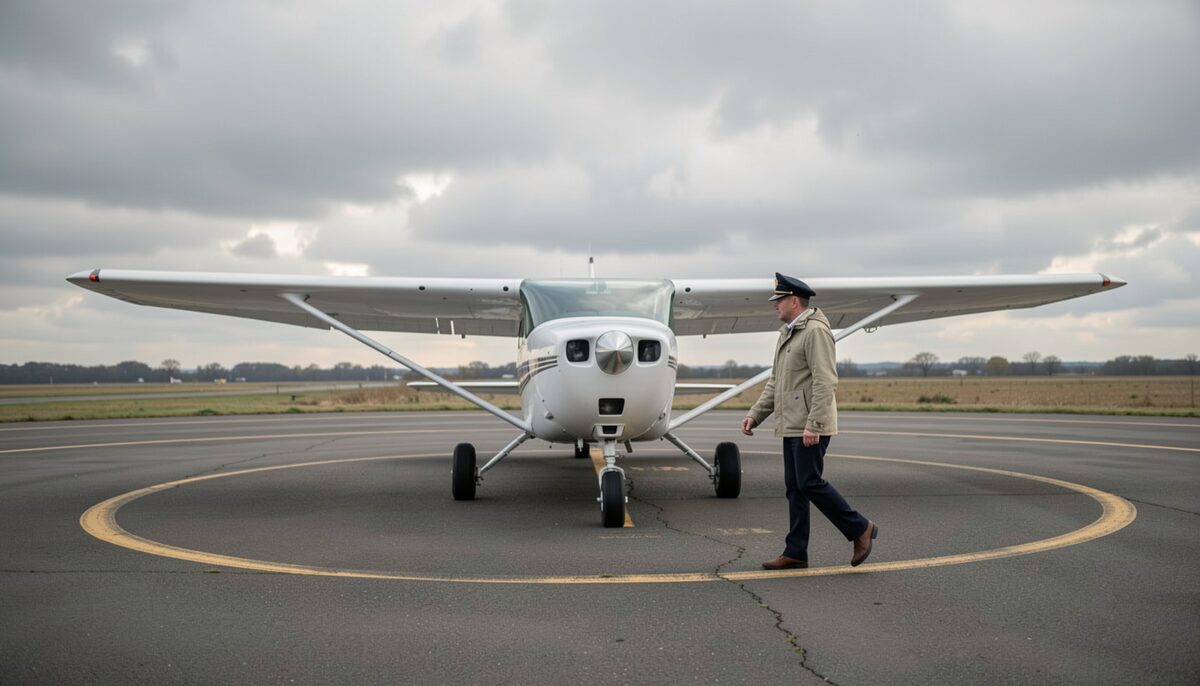
  2. A pilot in a light jacket walking a preflight circle around a single-engine aircraft on a grey overcast morning, one hand raised toward the wing, a runway marker and low cloud behind. Careers and certificates Pilot certificates and ratings and what each one allows Student, private, commercial and airline transport certificates each carry privileges, and ratings add the aircraft or approach allowed.
  3. A wall calendar and an open notebook on a desk in an operator office, a filing cabinet and a stack of folders behind, a pen resting across the open page in low afternoon light. Rules and map How a federal aviation rule reaches the operators it binds A proposed rule moves through comment, publication and incorporation, then reaches operators through the regulation and guidance chain.
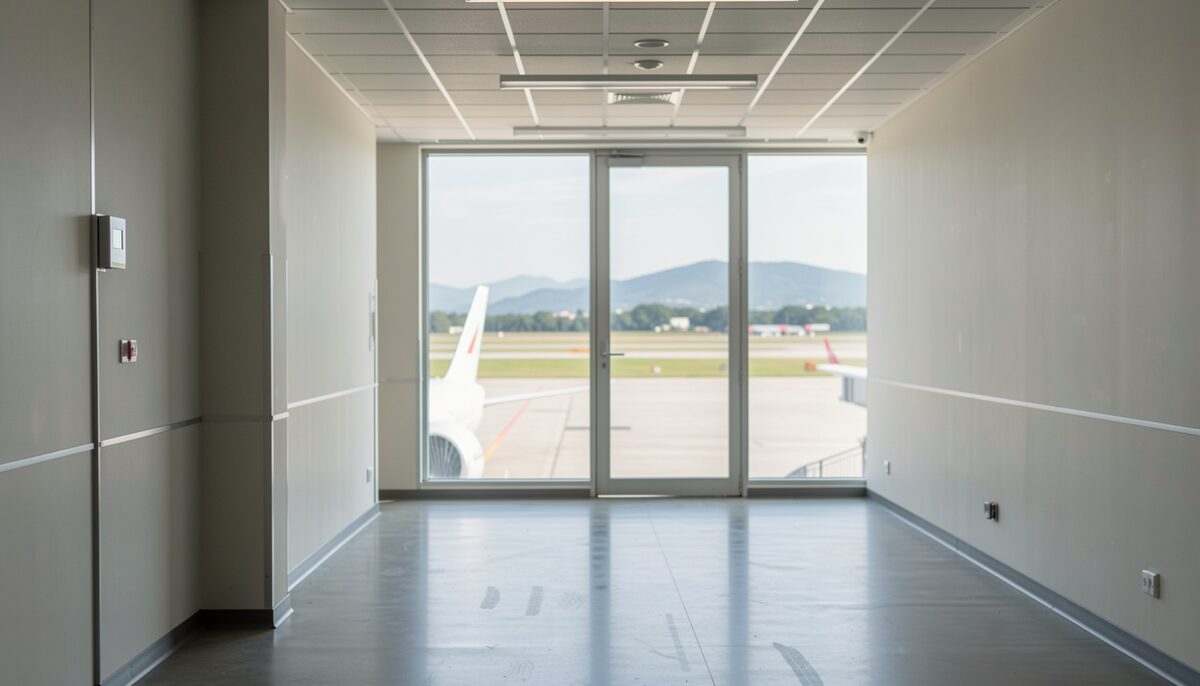
  4. An empty municipal terminal corridor with a long window wall overlooking a runway, low hills beyond the far threshold, polished floor and a row of unused seating along the glass. Rules and map Who owns and runs an airport and what decides a control tower Airports are owned by cities, counties, authorities or private parties, and a control tower follows from traffic and funding criteria.
  5. A quiet office desk with bound volumes of federal regulations stacked at one end, an open laptop showing a rule docket page, a notebook and pen beside it in flat daylight. Rules and map Which federal agencies regulate United States aviation Civil aviation oversight spreads across several federal bodies, each holding a different piece of the rulemaking and safety system.
  6. An outdoor airport sign frame standing on grass beside a windsock, a distant runway and a low hangar beyond it, flat afternoon light and no lettering legible on the frame. Rules and map Federal programs that shape aviation work Federal programs touch airports, air traffic, certification and the rulemaking that reaches operators across the United States.
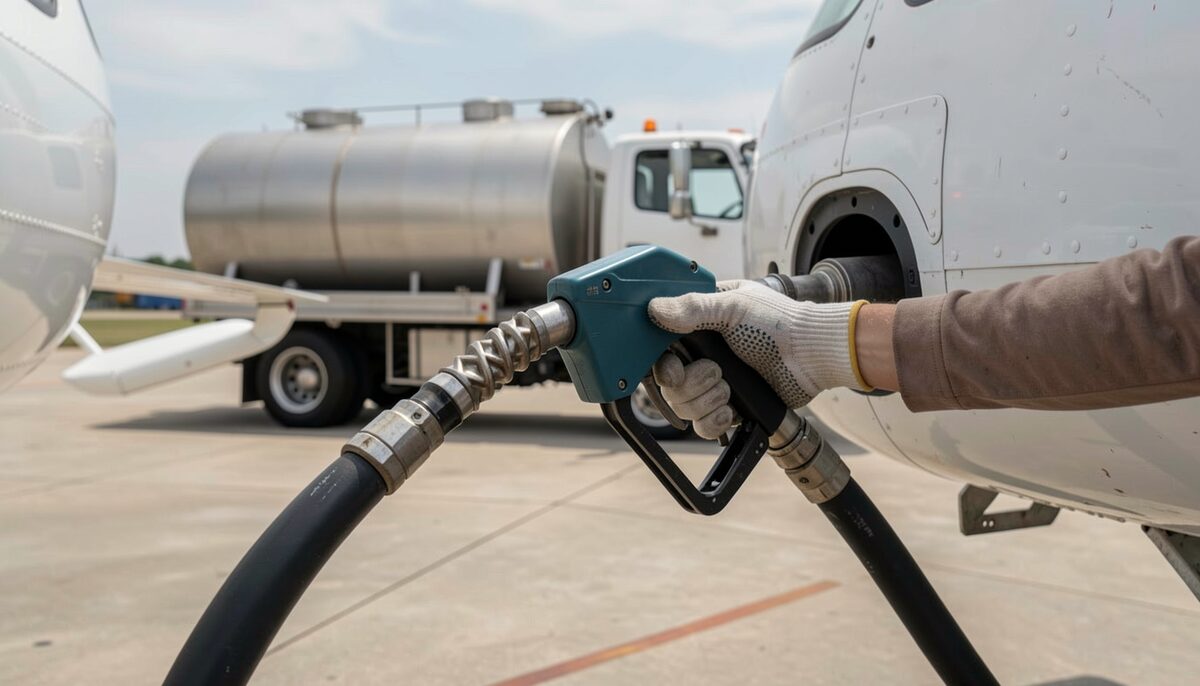
  7. A fuel truck hose connected to an under-wing refuelling port, a lineman in gloves watching the meter housing, the truck body and its hose reel filling the background of a sunlit ramp. Operations and upkeep Fuel grades for piston and turbine aircraft and who supplies them Avgas and jet fuel grades differ by engine type and handling, and the supply chain runs from refinery to airport storage to the truck.
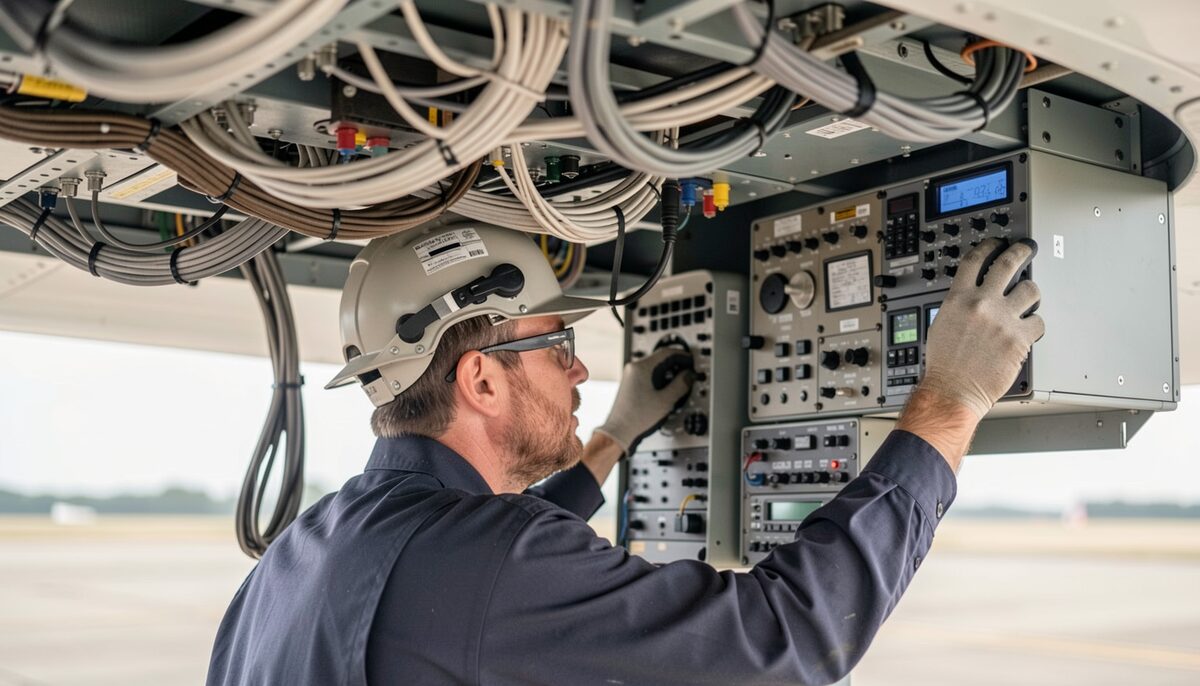
  8. An avionics technician lying on a creeper beneath an open instrument panel, bundled wiring looms running overhead, a work light clipped to the panel edge and a laptop on the cockpit floor. Operations and upkeep Avionics work on an aircraft and when an upgrade is required Avionics installations follow certification and airworthiness rules, and some airspace or equipment mandates force an upgrade.
  9. A technician in gloves inspecting a removed propeller blade on a wooden workbench, labelled parts trays arranged along the bench and a second propeller blade resting on a stand behind. Operations and upkeep What a repair station is and what keeps its approval valid A repair station holds a certificate to perform maintenance under specific ratings, and its approval depends on inspections and records.
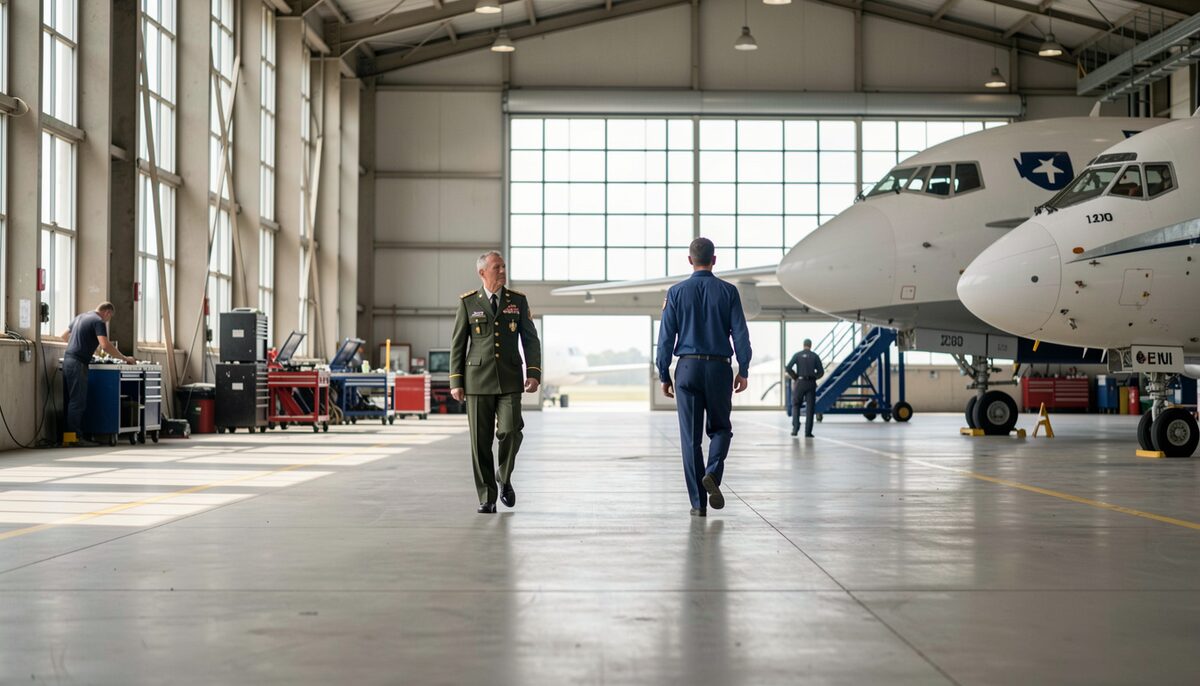
  10. A wide hangar floor under tall windows where several people in work clothes walk between parked aircraft, a mechanic carrying a tray of tools and a small aircraft with its engine cowling open. Careers and certificates Map of aviation work and who employs people in it A map of aviation work in the United States, from flight and maintenance to dispatch, avionics and the operators that hire them.
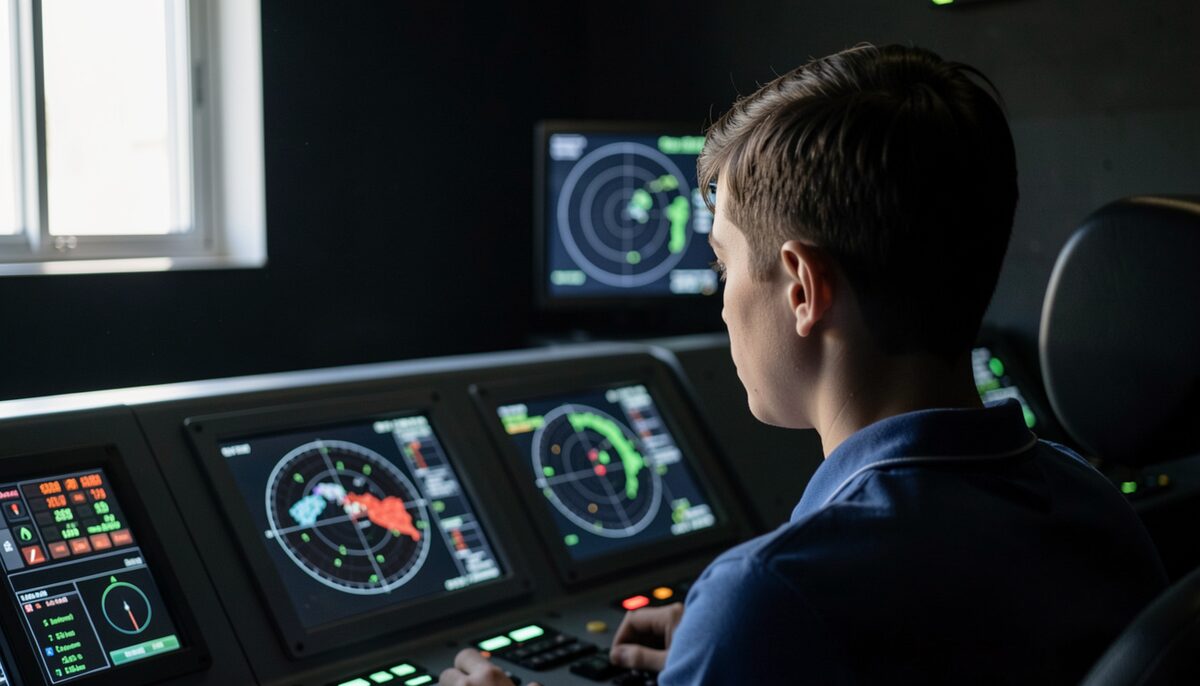
  11. A trainee standing behind a seated colleague in a darkened simulation room, both watching a bank of radar scopes, the console panels glowing green and amber across the desk. Training routes Flight dispatcher and air traffic control training routes Dispatcher and air traffic control work each have their own training path, certificate and hiring pipeline into the national system.
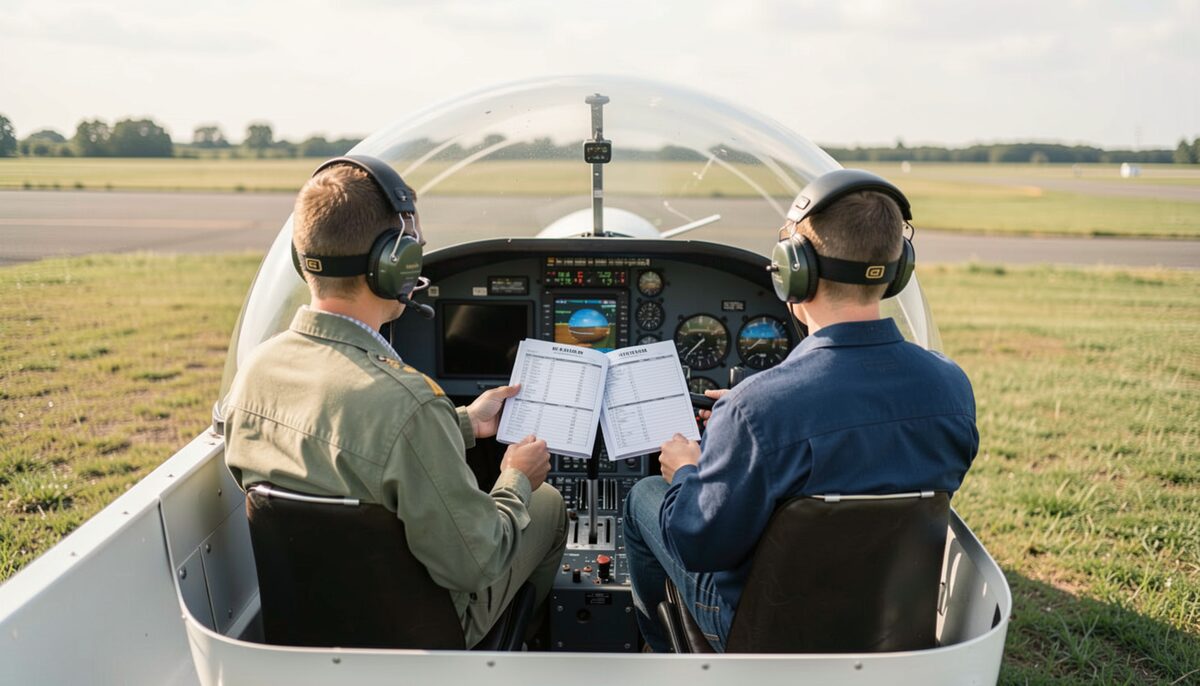
  12. A flight instructor and a student seated side by side in the cockpit of a small trainer, a printed checklist open between them on the centre console, grass and a paved ramp visible through the windscreen. Training routes Choosing a flight school and Part 61 versus Part 141 Part 61 and Part 141 flight training differ in structure, recordkeeping and minimum hours, and the choice shapes a pilot's early path.
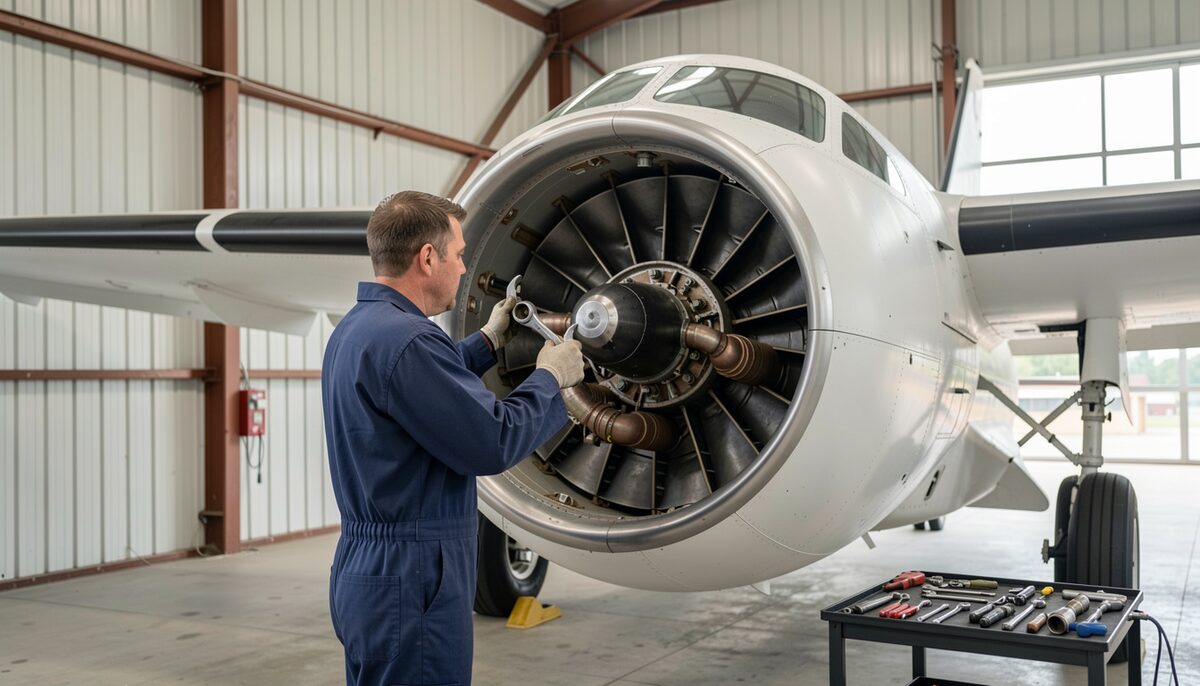
  13. A mechanic in dark coveralls leaning into an open engine cowling with a torque wrench in one hand, work lamps lighting the hangar bay around him and an open tool case resting on the wing root. Careers and certificates How the aviation maintenance technician certificate works The aviation maintenance technician certificate, its airframe and powerplant ratings, and the experience or school route to eligibility.
  14. A line technician in a high-visibility vest standing on a sunlit concrete ramp, right arm raised to marshal a small twin-engine aircraft toward a fuel truck parked behind him, hangar doors closed in the background. Operations and upkeep What an FBO does between two flights A fixed base operator sells fuel, parking, hangar space and line services between flights, and its role shifts with the airport it serves.

Where to go next

07 Where to continue

If you are choosing a route, start with the section page for careers and certificates. If you are checking a rule, start with the section page that gathers the federal programs.